
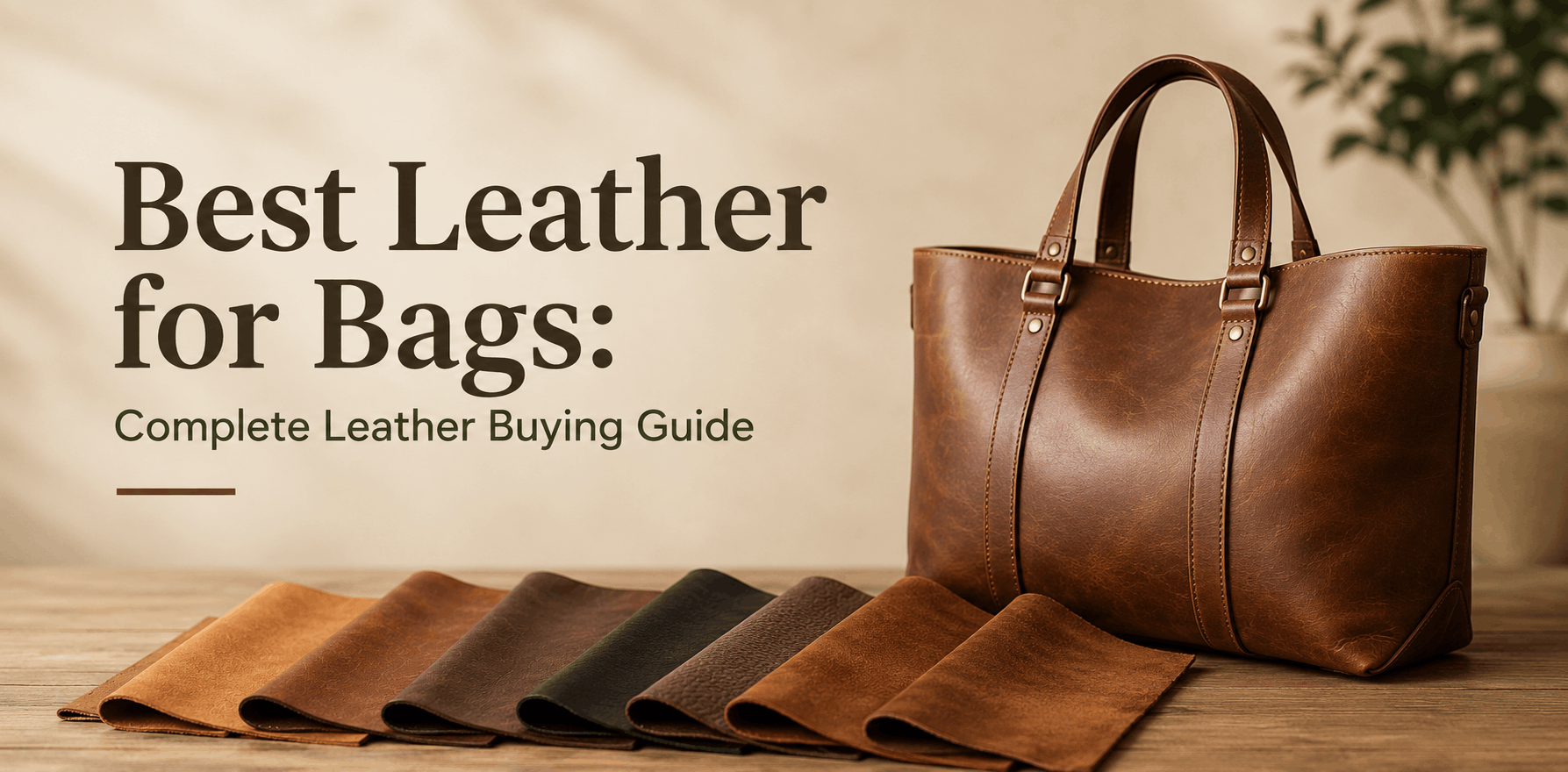
Two leather bags can look almost identical on the outside. Six months later, one develops a rich patina while the other starts peeling, cracking, or losing its shape.
The difference often isn’t the craftsmanship. It’s the type of leather chosen before production even begins.
Many OEM and private-label brands assume that thicker leather indicates better quality or that genuine leather is the premium option. Please do not make this mistake!
If you’re looking to source the best leather for bags, understanding how each leather type performs is far more important than choosing the most expensive one.
This guide will cover everything you need to make that decision with confidence. So, stay until the end!
What Makes One Leather Better Than Another?
Before comparing leather grades, it’s important to understand why leather behaves differently in the first place. The reason lies in how the leather is selected, processed, tanned, and finished.
If you’re looking for the best leather for bags, understanding these differences is far more valuable than simply comparing prices.
1. The Part of the Hide Matters
Not every part of an animal hide offers the same quality.
- The back produces the strongest and most consistent leather because the fibers are tightly packed.
- The shoulder has more natural grain and character, making every piece slightly unique.
- The belly is softer and more flexible but also stretches more, making it less suitable for structured products.
This is why manufacturers carefully select different sections of the hide for different products.
2. The Leather Processing Method
Once the hide is tanned, it can be processed in several ways to achieve a specific look and feel.
For example, the surface may be:
- Left completely natural.
- Lightly sanded to remove imperfections.
- Embossed with an artificial grain pattern.
- Coated with protective finishes.
Each process changes the leather’s appearance, texture, and long-term performance.
3. The Tanning Process
Tanning transforms raw animal hide into durable leather that resists decomposition.
The two most common methods are:
- Chrome tanning, which produces softer, more flexible leather with excellent color consistency.
- Vegetable tanning, which creates firmer leather that gradually develops a rich patina over time.
The tanning method influences how the leather feels, ages, and responds to everyday use.
4. The Surface Finish
Many buyers confuse leather grades with leather finishes, but they are not the same.
A leather grade describes the quality of the hide, while a finish determines its final appearance and texture.
For example, smooth, pebbled, waxed, nubuck, and suede finishes can all create completely different products, even when the underlying leather is similar.
This is why two handbags made from the same leather grade may look nothing alike.
| Buyer’s Insight: Always ask where the hide came from, how it was tanned, and how it was finished. Those three answers reveal far more about performance than the product’s appearance ever will. |
Also Read: How to Compare Leather Samples Before Approving Production: A Buyer’s Checklist
Leather Grades Explained: Why They Matter More Than You Think
A leather grade simply reflects how much of the hide’s natural grain remains after processing. As more surface layers are altered or removed, the leather’s appearance, durability, and price change.
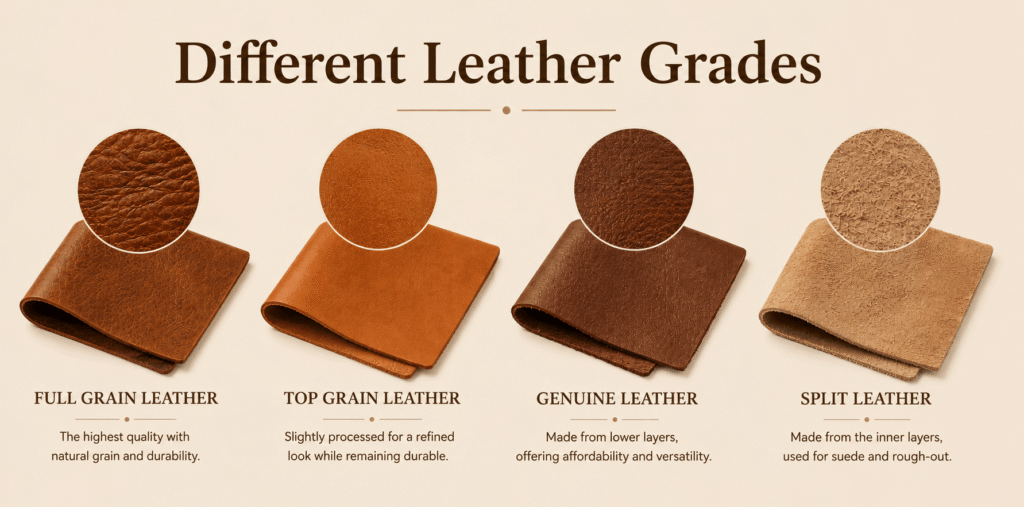
Understanding these differences makes it much easier to choose the right leather for your product.
1. Full Grain Leather
Full-grain leather is the highest-quality leather grade because the natural grain remains intact. It isn’t sanded or buffed, allowing the leather to retain its original strength, texture, and character.
Best for
- Premium handbags
- Luxury wallets
- Briefcases
- High-end accessories
Why choose it?
- Exceptional durability.
- Develops a rich patina over time.
- Strong natural fiber structure.
- Every piece has a unique grain pattern.
Things to consider
- Higher material cost.
- Natural marks remain visible.
- Requires occasional conditioning.
2. Top Grain Leather
Top grain leather is lightly sanded to remove natural imperfections before receiving a protective finish. The result is a cleaner and more uniform appearance while maintaining excellent durability.
Best for
- Fashion handbags
- Premium wallets
- Business accessories
- Everyday leather goods
Why choose it?
- Smooth, refined finish.
- Easier to maintain.
- More consistent color and texture.
- Lower cost than full grain leather.
Things to consider
- Develops less patina over time.
- Slightly lower durability than full grain leather.
3. Genuine Leather
Despite its name, genuine leather isn’t the highest grade. It is produced from the remaining layers after the top grain has been removed and is usually finished with coatings or embossing to improve appearance.
Best for
- Budget-friendly products
- Promotional items
- Entry-level leather accessories
Why choose it?
- More affordable.
- Wide range of finishes.
- Suitable for cost-sensitive collections.
Things to consider
- Lower durability.
- Limited patina development.
- May show wear sooner with daily use.
4. Split Leather
Split leather is produced from the lower layers of the hide after the top grain has been separated. It is softer and more flexible but naturally less durable than higher leather grades.
Best for
- Suede products
- Fashion accessories
- Decorative applications
Why choose it?
- Soft texture.
- Cost-effective.
- Ideal for specialty finishes.
Things to consider
- Lower strength.
- Less resistant to moisture and abrasion.
- Not the best choice for products requiring long-term structural support.
Different Leather Types & Finishes: Choosing the Right Look and Feel
Choosing the right leather grade is only half the decision. The finish gives leather its personality. It influences how the product feels, looks, ages, and performs in everyday use.
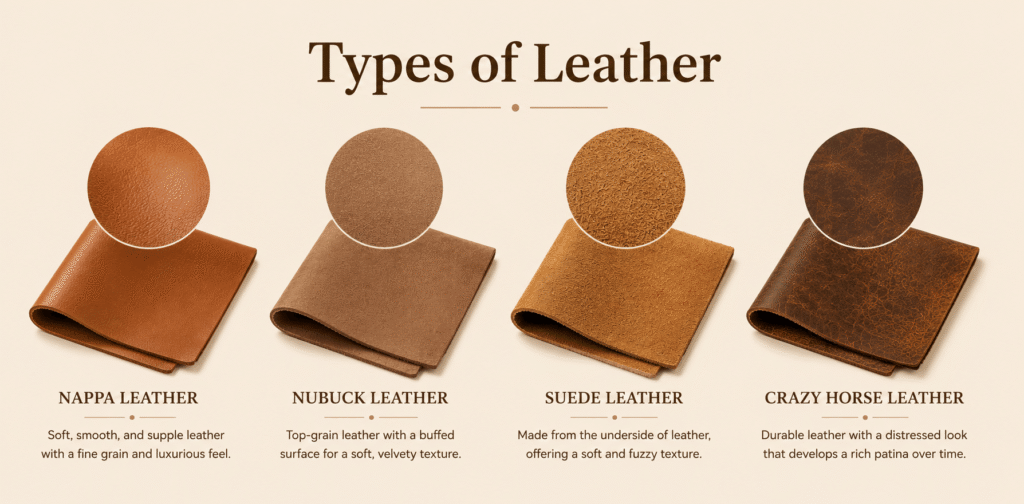
1. Nappa Leather
If comfort is your priority, Nappa leather is difficult to beat. Known for its exceptionally soft feel, it is commonly produced from full-grain or top-grain hides and finished to preserve a smooth, luxurious surface.
Best for
- Premium handbags
- Luxury wallets
- Fashion accessories
- Travel organisers
Why brands choose it
- Soft and supple feel.
- Lightweight without compromising comfort.
- Smooth surface enhances premium appeal.
- Comfortable for products handled every day.
Things to consider
- Softer leather is more prone to surface scratches.
- Requires regular care to maintain its finish.
2. Nubuck Leather
Nubuck is created by lightly sanding the outer grain surface. This produces a soft, velvety texture while retaining much of the original hide’s strength.
Best for
- Premium handbags
- Lifestyle accessories
- Designer footwear
Why brands choose it
- Rich, velvety appearance.
- Premium tactile experience.
- Elegant matte finish.
- Stronger than suede because the grain layer remains.
Things to consider
- Marks easily with water and oils.
- Requires specialized cleaning products.
- Not ideal for products exposed to frequent moisture.
3. Suede Leather
Suede is made from the inner split of the hide rather than the outer grain. The result is a soft, brushed texture with excellent flexibility.
Best for
- Fashion handbags
- Pouches
- Footwear
- Lifestyle accessories
Why brands choose it
- Soft, comfortable texture.
- Distinctive premium appearance.
- Flexible for relaxed product designs.
- Wide range of color options.
Things to consider
- Less resistant to abrasion than grain leather.
- Absorbs moisture more easily.
- Better suited for occasional use than heavy-duty products.
4. Crazy Horse Leather
Despite its name, Crazy Horse leather doesn’t come from horsehide. It’s usually full grain leather treated with natural waxes. As the leather bends and flexes, the wax shifts, creating a distinctive vintage appearance.
Best for
- Messenger bags
- Travel bags
- Journals
- Outdoor accessories
Why brands choose it
- Develops character with everyday use.
- Naturally distressed appearance.
- Hides minor scratches well.
- Ages beautifully over time.
Things to consider
- The changing appearance is intentional.
- Not suitable for brands seeking a flawless, uniform finish.
| Insider Tip: Ask your manufacturer for samples that have been used for several months. Some leathers become more beautiful with age, while others are designed to maintain a consistent appearance. |
Also Read: 10 Mistakes Importers Make When Sourcing Leather Goods from India (And How to Avoid Them)
Chrome-Tanned vs Vegetable-Tanned Leather: What Are the Primary Differences?
We have mentioned this above. But you need detailed knowledge to source the best leather for bags. Otherwise, you will end up believing that these are just two different names with almost similar outcomes.
Chrome-Tanned Leather
Chrome tanning is the most widely used method in modern leather manufacturing. It produces leather that feels soft, bends easily, and accepts colors consistently.
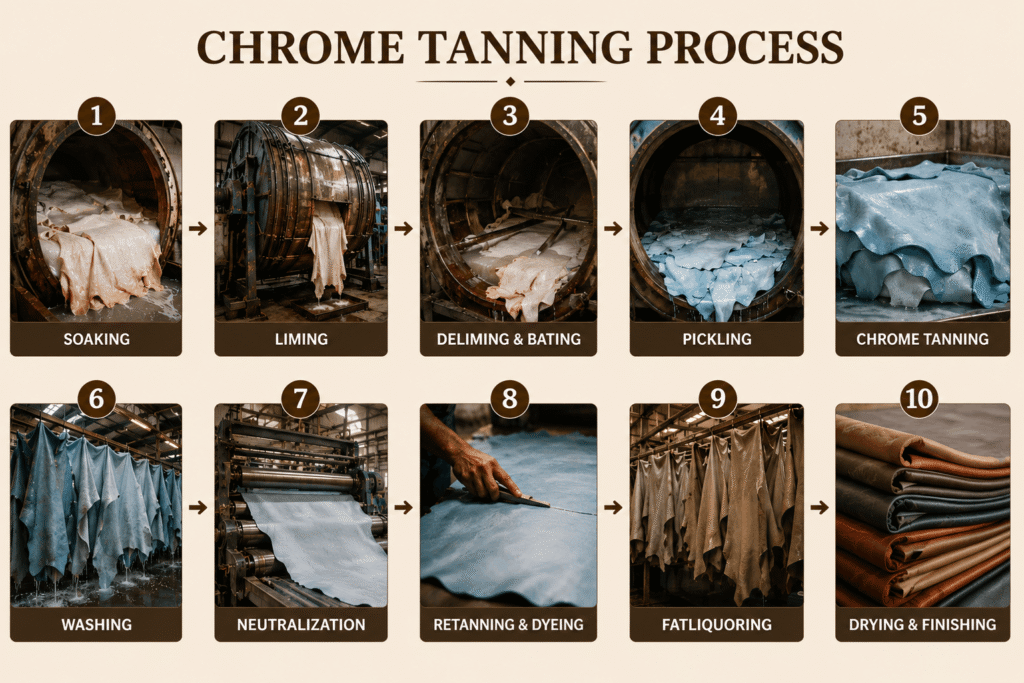
That’s why it’s commonly selected for fashion collections where comfort and color variety are important.
Why manufacturers choose it
- Faster production cycle.
- Consistent color across large orders.
- Soft feel with excellent flexibility.
- Suitable for complex product designs.
Things to consider
- Doesn’t develop the same natural aging characteristics as vegetable-tanned leather.
- Premium appearance depends more on the finish than on long-term aging.
Vegetable-Tanned Leather
Vegetable tanning uses natural tannins extracted from plants instead of chromium salts. The process takes much longer but produces leather with a firmer structure and distinctive character.
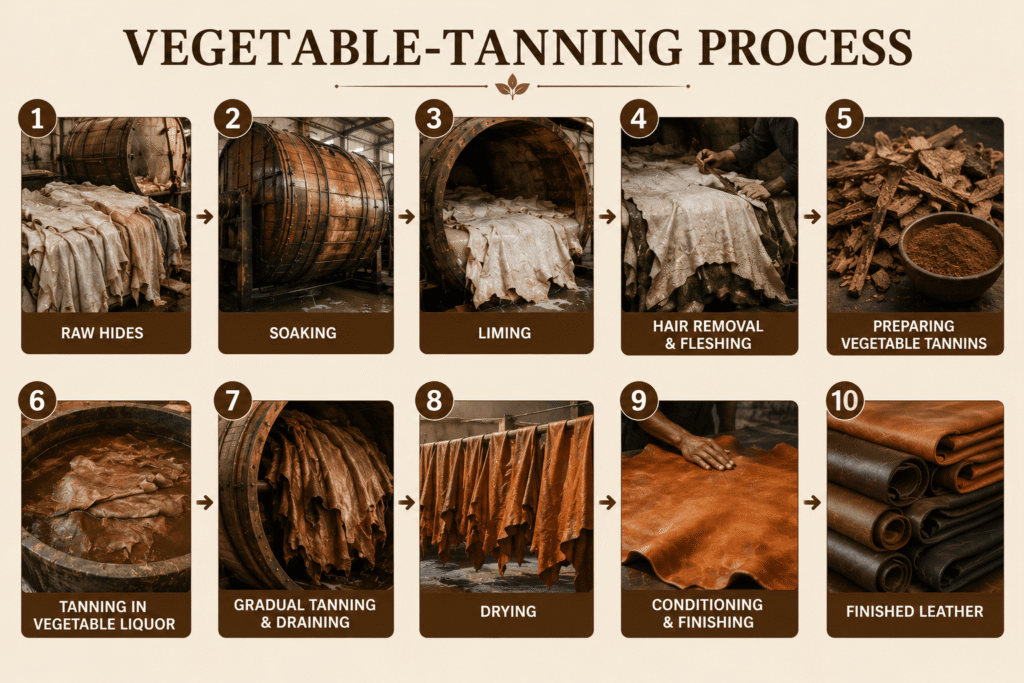
Over time, exposure to sunlight, handling, and natural oils gradually changes its color, creating a unique patina.
Why manufacturers choose it
- Rich natural appearance.
- Excellent shape retention.
- Ages beautifully with regular use.
- Popular for handcrafted collections.
Things to consider
- Longer production time.
- Higher material cost.
- Requires more care in wet conditions.
Here’s a side-by-side comparison to help you source the best leather for bags:
| Feature | Chrome-Tanned Leather | Vegetable-Tanned Leather |
| Tanning process | Chromium salts | Natural plant tannins from bark, leaves, and wood |
| Processing time | Usually 1–3 days | Several weeks |
| Feel | Soft and flexible | Firm and structured |
| Colour options | Wide range | Mostly natural earth tones |
| Appearance over time | Changes very little | Develops a rich patina |
| Water resistance | Better | Lower without treatment |
| Typical applications | Fashion products | Premium handcrafted goods |
Neither method is universally better. The right choice depends on your product and brand positioning.
Choose chrome-tanned leather if you need:
- Softness and flexibility.
- Consistent colors across bulk production.
- Faster manufacturing timelines.
Choose vegetable-tanned leather if you value:
- Natural aging and character.
- Structured products.
- Traditional craftsmanship and premium positioning.
| Bonus Tip: Don’t ask your supplier whether the leather is chrome-tanned or vegetable-tanned. Ask why that tanning method was recommended for your product. |
Leather Thickness & Temper: The Details Most Buyers Overlook
Searching for the best leather for bags cannot be done without considering its thickness and temper.
Why? They determine how the leather folds, holds its shape, feels in the hand, and performs over time.
Leather Thickness: More Isn’t Always Better
Leather thickness is usually measured in millimeters (mm) or ounces (oz). While thicker leather often feels stronger, it isn’t automatically the right choice.
Consider this: A bulky wallet feels uncomfortable in a pocket, while a thin travel bag may struggle to carry weight.
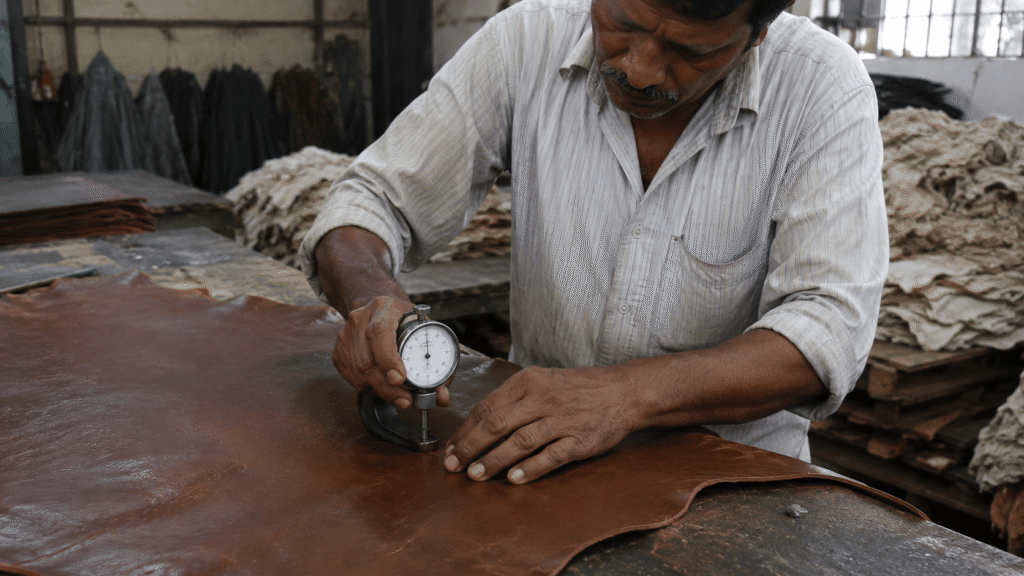
Here’s a quick reference:
| Product | Typical Thickness | Why It Works |
| Wallets | 0.8–1.2 mm | Slim profile without sacrificing durability. |
| Handbags | 1.2–1.6 mm | Balances structure and flexibility. |
| Tote & Travel Bags | 1.6–2.0 mm | Better load-bearing capacity. |
| Briefcases | 1.8–2.2 mm | Holds shape under daily use. |
| Belts | 3.2–4.0 mm | Provides strength and long-term stability. |
Leather Temper: The Feel That Customers Notice First
Temper refers to how soft or firm the leather feels after tanning and finishing. It isn’t a measure of quality. It’s a design choice.
1. Soft Temper
Soft leather bends easily and drapes naturally.
Commonly used for
- Slouchy handbags
- Fashion totes
- Pouches
- Travel accessories
Why choose it?
- Comfortable to carry.
- Creates a relaxed, premium look.
- Easy to fold and store.
2. Medium Temper
Medium temper offers a balance between flexibility and structure.
Commonly used for
- Everyday handbags
- Wallets
- Messenger bags
- Laptop sleeves
Why choose it?
- Holds its shape without feeling stiff.
- Suitable for most lifestyle products.
- Comfortable for everyday use.
3. Firm Temper
Firm leather maintains its shape with minimal movement.
Commonly used for
- Briefcases
- Structured handbags
- Belts
- Luxury business accessories
Why choose it?
- Sharp, structured appearance.
- Better edge retention.
- Ideal for products that need a professional look.
| Industry Secret: Don’t ask your manufacturer for the thickest leather available. Instead, ask which combination of thickness and temper best suits your product. |
Not sure which leather fits your product? Tell us what you’re creating. We’ll help you narrow down the right material before you invest in sampling. No sales pressure. No obligations.
How to Choose the Best Leather for Different Products
There isn’t one leather that works for every product. A type that performs brilliantly in a leather wallet may not be the right choice for a leather laptop bag.
The best choice depends on how the product will be used, how it should feel, and how you want it to age over time.
1. Best Leather for Handbags
Handbags need to balance appearance with everyday practicality. They should feel premium, hold their shape, and withstand regular handling.
Recommended choices
- Full Grain Leather for luxury collections.
- Top Grain Leather for premium everyday bags.
- Nappa Leather for soft, elegant silhouettes.
Avoid choosing
- Split leather for structured handbags that carry heavier loads.
2. Best Leather for Wallets
Wallets are handled dozens of times every day. The leather should remain slim without sacrificing durability.
Recommended choices
- Full Grain Leather for premium wallets that age gracefully.
- Top Grain Leather for a cleaner, more uniform finish.
Avoid choosing
- Thick leather simply because it feels premium. It often creates bulky wallets that become uncomfortable in daily use.
3. Best Leather for Belts
Belts experience constant tension, bending, and friction. Strength matters far more than softness.
Recommended choices
- Full Grain Leather
- Vegetable-Tanned Leather
These leathers retain their shape well and resist stretching over time.
Avoid choosing
- Soft fashion leathers that may lose their structure with repeated use.
4. Best Leather for Briefcases
Business bags should project professionalism while maintaining their shape through daily commuting.
Recommended choices
- Full Grain Leather
- Vegetable-Tanned Leather
These combinations create a structured appearance while improving in character with age.
5. Best Leather for Travel Bags
Travel products face frequent handling, heavier loads, and changing environments.
Recommended choices
- Full Grain Leather
- Crazy Horse Leather
Both offer excellent durability, while Crazy Horse develops a distinctive vintage character as it travels.
Also Read: How to Choose an OEM Leather Goods Manufacturer for Your Brand
The 5 Questions You Should Answer Before Choosing Leather For Bags
The best leather for bags depends on your product, customer, and price point. Answer these five questions before contacting a leather supplier in India.
1. Who Will Use the Product?
A daily office bag needs different leather than a luxury evening clutch. Think about how often the product will be carried, how much weight it should support, and the conditions it will face.
2. How Should the Leather Age?
Some brands want leather that develops a rich patina over time. Others prefer a clean, uniform appearance that changes very little. Your answer immediately narrows your leather options.
3. What’s Your Target Price?
The leather often represents the largest material cost. Choosing a premium leather for an entry-level collection may reduce your margins without increasing perceived value.
4. Does the Product Need Structure or Flexibility?
A structured briefcase and a soft tote bag rarely use the same leather. Firm leathers hold their shape better, while softer leathers create a relaxed look and feel.
5. What Experience Should Customers Remember?
Customers rarely ask which leather grade was used. They remember how the product felt, how it aged, and whether it still looked good after months of use.
From Leather Selection to Global Delivery: How SMPC NAVSETU Helps?
Choosing the best leather for bags is only the first step. Choosing the right manufacturing partner is just as important.
At SMPC Navsetu, we work closely with global brands, importers, wholesalers, and private-label businesses to match the right leather with the right application.
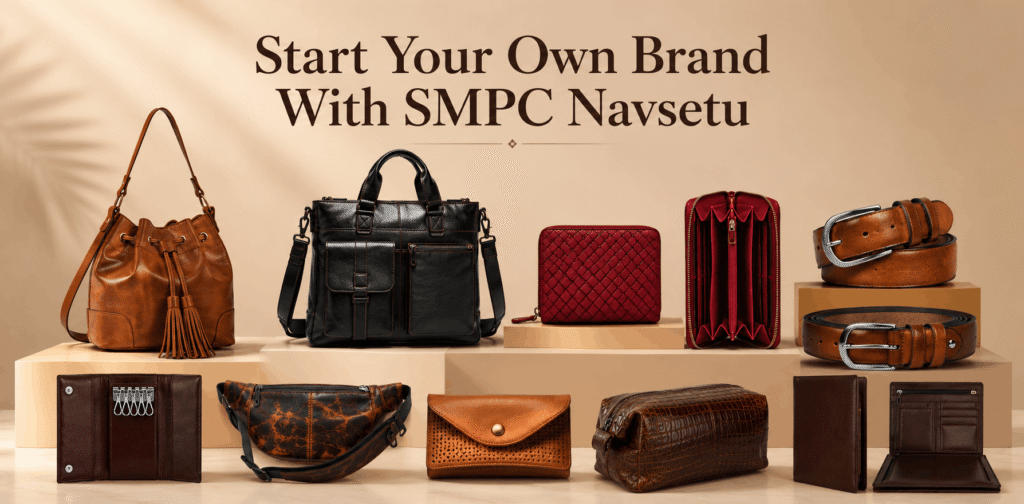
What we bring to your business:
- End-to-end sourcing solutions, from product development to final shipment.
- Access to trusted manufacturing partners across India’s leading leather clusters.
- Expert guidance in selecting the right leather, construction, and specifications.
- OEM and private-label manufacturing tailored to your brand requirements.
- Factory sourcing support for buyers looking beyond a single manufacturer.
- Quality inspections throughout production to maintain consistency.
- Export-ready packaging and documentation for international shipments.
- Transparent communication from inquiry to delivery.
Whether you need a manufacturing partner or a reliable sourcing agent, our goal is simple: to help you source the right product from the right factory at the right quality.
We’re always happy to answer questions and share practical advice. No sales pressure at all. That’s a promise
Start your own leather brand with SMPC NAVSETU. Send us an email with all your queries at info@smpcnavsetu.com.
Frequently Asked Questions (FAQs)
1. Is Italian leather better than Indian leather?
Not necessarily. Leather quality depends more on the tannery, hide selection, tanning process, and craftsmanship than the country of origin. India is one of the world’s leading leather exporters and manufacturers of premium leather goods for many international brands.
2. Does expensive leather always mean better quality?
No. Price reflects several factors, including leather grade, tanning method, craftsmanship, hardware, brand positioning, and manufacturing costs. A well-made top-grain product can often outperform a poorly manufactured full-grain one.
3. Can two bags made from full-grain leather still look different?
Yes. Full-grain leather preserves the hide’s natural characteristics. Grain pattern, color variation, and natural markings differ from hide to hide, making each product unique.
4. Which leather develops the best patina?
Vegetable-tanned full-grain leather is widely regarded as the best choice for developing a rich, natural patina. Regular use, sunlight, and natural oils gradually enhance its color and character.
5. How can I verify the leather quality before placing a bulk order?
Request leather swatches, a finished product sample, and the complete material specifications, including leather grade, tanning method, thickness, temper, and finish.
6. Should I choose one leather for my entire product collection?
Not usually. Many brands use different leathers across their collections. For example, full-grain leather for premium bags, top-grain leather for everyday products, and Nappa leather for fashion accessories.
7. What’s the biggest mistake first-time leather buyers make?
They compare products using leather names alone. A better comparison includes the leather grade, tanning method, thickness, temper, finish, and construction quality before looking at the price.
8. Should I approve leather from photos or physical swatches?
Always request physical swatches whenever possible. Color, grain, softness, and finish often appear different on screens, making photographs unreliable for final material approval.
9. How do professional buyers compare quotations from different manufacturers?
They compare the complete specification, not just the price. That includes leather grade, tanning method, thickness, lining, hardware, stitching, packaging, and quality requirements.
10. When should I involve my leather manufacturer in product development?
As early as possible. An experienced leather manufacturer or sourcing partner can recommend suitable options and suggest practical design improvements. They can also identify cost-saving opportunities and prevent production challenges before sampling begins.

Pingback: Sourcing Leather Goods from India? Avoid These 10 Mistakes